
Physical Recovery: How Exercise Helps in Cardiac Rehab
Get Moving Again: Why Exercise Is Vital for Cardiac Rehab
Recovering from a heart attack, heart failure, or cardiac surgery can feel daunting. The idea of exercising might even seem counterintuitive—shouldn’t you be resting? While rest is a crucial part of the healing process, movement is equally vital. This is where cardiac rehabilitation comes in. It’s a structured program designed to help you regain strength, prevent future heart problems, and improve your overall quality of life. Here’s what you need to know about exercise after heart surgery and how to streamline the recovery process.
What Is Cardiac Rehabilitation?
Cardiac rehabilitation (rehab) is a medically supervised program designed to improve cardiovascular health for people who have experienced heart problems. These programs are typically recommended for people recovering from:
- Heart attack
- Heart failure
- Coronary artery bypass surgery
- Angioplasty and stents
- Heart valve repair or replacement
How Exercise Improves Recovery
When you exercise during rehab, your heart muscle becomes more efficient. It learns to pump blood through your body with less effort. Regular physical activity also helps lower blood pressure and improve cholesterol levels—two major risk factors for heart disease. Beyond the physical benefits, heart recovery workouts combat the fatigue that often follows surgery or illness. As your stamina builds, daily tasks like climbing stairs or carrying groceries should become easier, getting you closer to a sense of normalcy.
Example Cardiac Rehab Exercises
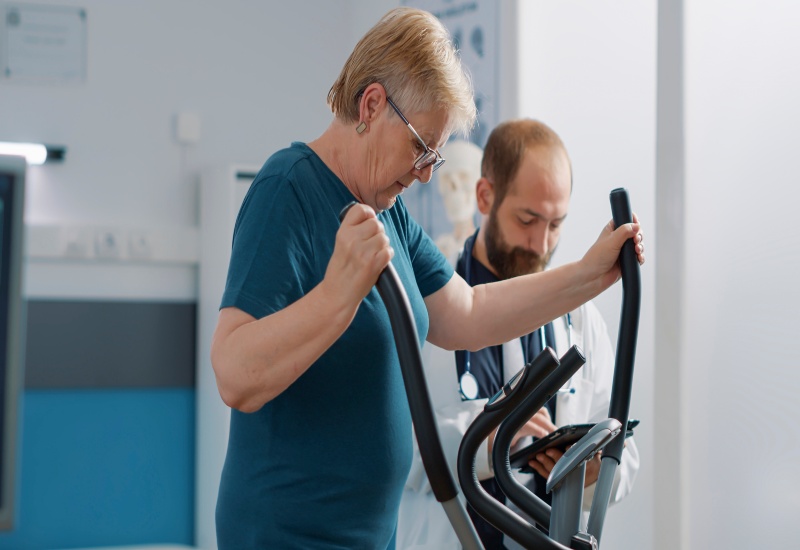
You certainly don’t have to sign up for a marathon to do cardiac rehab exercises! In fact, you should start slow and build up gradually. Always check with your healthcare team to make sure you’re doing the right activities for your fitness level, but these low-impact exercises can make a big difference during recovery:
- Walking—It’s accessible, easy to control, and effective for building endurance.
- Stationary Cycling—This excellent low-impact option gets the heart rate up without stressing the joints.
- Light Resistance Training—Using light weights or resistance bands helps maintain muscle mass, which is crucial for metabolism and overall strength.
- Stretching and Flexibility—These exercises improve range of motion and prevent injury during other activities.
The Long-Term Benefits of Cardiac Rehabilitation
Committing to the exercise portion of cardiac rehab offers benefits that extend well beyond the duration of the program. Patients who follow heart health fitness tips may be less likely to have future heart issues (like high blood pressure), and long-term adherence to an exercise routine can help with:
- Weight Management—Regular activity helps maintain a healthy weight, which reduces the strain on the heart.
- Better Mental Health—Exercise releases endorphins that help combat depression and anxiety.
- Improved Sleep—Physical activity promotes deeper, more restorative sleep.
Make the Most of Heart Health Fitness Tips
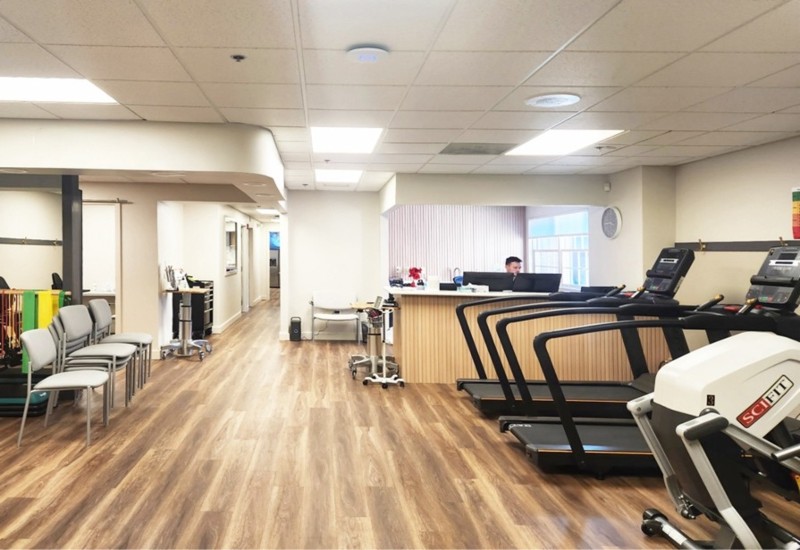
As you recover from a heart attack or surgery, Cardiovascular Specialists of New England is in your corner. We recently opened our brand new Intensive Cardiac Rehabilitation Center and work with patients across New Hampshire who are already experiencing the benefits of cardiac rehabilitation and low-impact exercise. Whether you’re just starting to take an interest in your heart health or have worked with us before, we’re glad to meet with you. Contact us today to schedule an appointment.
Stay Tuned! More information coming soon!