
Traditional vs Minimally Invasive Valve Surgery
There are four valves in the heart, and they work together to move blood through the heart and to the body. When one of the four valves is not functioning properly, either because it’s too narrow or is not opening and closing correctly, the blood flow in the body can change, causing the heart to have to work harder. To repair this, doctors have traditionally used open heart surgery to repair or replace the damaged valve or valves, but minimally invasive procedures have made it possible to fix the problem with less pain, shorter hospital stays, and faster recovery.
Overview: Heart Valve Surgery Types and What They Treat
The type of heart valve surgery performed depends on a person’s age, health, anatomy of the aortic valve, and type of heart valve disease, as well as the severity of the disease. The four heart valves are the tricuspid valve, the pulmonary valve, the aortic valve, and the mitral valve. These valves all have flaps, and when they’re working as they should, they open and close once during each heartbeat, moving the blood in one direction. Sometimes, a valve becomes too narrow (stenosis), and it is difficult for blood to flow through the valve. In other cases, the valve leaks, and blood washes backwards (regurgitation). When blood is not flowing correctly, the symptoms can be managed with medication, but that’s not a long-term solution.
- Heart valve repair preserves much of the person’s tissue while fixing the damaged valve. Mitral valves are the most common valves to be repaired, but the other valves can be repaired as well.
- Heart valve replacement removes the valve that’s not working correctly, and replaces it with a biocompatible valve. This means that whether it’s replaced with a biological or mechanical valve, the immune system won’t reject the new valve.
Traditional Valve Surgery — How it Works and When it’s Needed
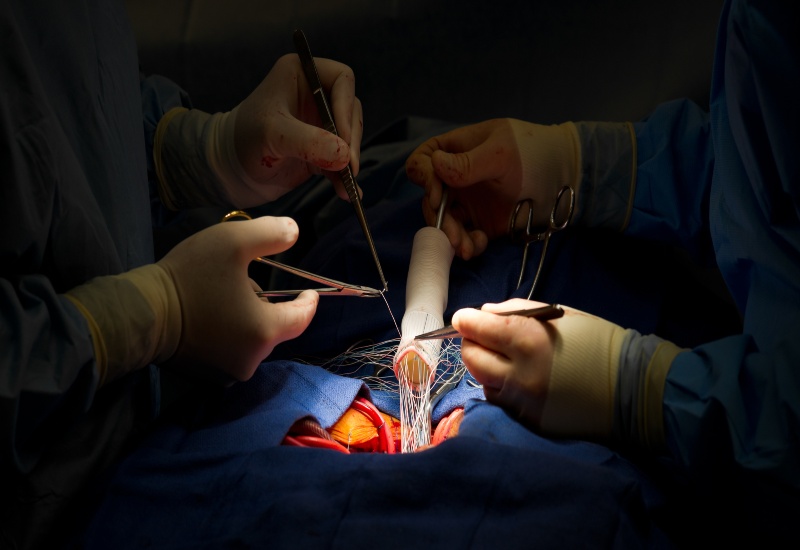
In traditional open-heart surgery for valve repair or replacement, a large incision is made in the chest, going through the breast bone, and the heart is temporarily stopped. The surgeon may repair the damaged valve by using a ring to support it, or may remove the valve and replace it with an artificial valve. Some valves are made of carbon-coated plastic; some are made from animal or human valves. Traditional valve surgery is necessary when the case is complex, as with the repair of multiple valves at once. Sometimes, this surgery is combined with other heart surgeries, like bypass, aortic aneurysm, or atrial fibrillation surgery. Additionally, for some patients, traditional surgery may offer more predictable long-term outcomes.
Minimally Invasive Valve Surgery — Benefits and Techniques
In some cases, minimally invasive surgery is a better option. This type of surgery is done using small incisions that allow the surgeon to reach the heart through the ribs, without cutting through the breastbone. This makes the recovery faster and less painful. This kind of surgery is sometimes robot-assisted, and while it’s not for everyone, it has several advantages over open heart surgery. In some cases, however, a surgeon may change course from a minimally invasive to an open procedure, if complications make it unsafe to continue with the minimally invasive approach.

Key Differences Patients Should Know: Minimally Invasive vs Cardiac Surgery Recovery and Treatment
Traditional surgery involves large incisions and a direct approach to the treatment area, while minimally invasive surgery uses smaller incisions and relies on guidance from imaging technology. In general, minimally invasive surgery is easier on patients, for several reasons.
- There is a reduced risk of complications when smaller incisions are used.
- Minimally invasive surgery typically has a shorter recovery time.
- There is less pain and scarring with minimally invasive surgery.
- Studies show that minimally invasive surgery often leads to better outcomes, with fewer complications than traditional surgery.
Benefits of Procedures Like TAVR vs Open Heart Surgery
There are different minimally invasive surgeries for heart valves, and one of the most innovative is TAVR. In this procedure, the cardiologist inserts a catheter into an artery, guides it to the heart, and places a new valve inside the old one. For high-risk patients, for whom open heart surgery is dangerous, this is a game changing intervention that can extend lifespan and improve quality of life. As with other minimally invasive surgeries, this procedure requires a much shorter hospital stay than open heart surgery. In fact, many patients can go home the same day, and because it only involves one small incision, TAVR, like most minimally invasive heart surgeries, offers an easier recovery period as well.
Contact Cardiovascular Specialists of New England to Discuss Valve Replacement Options
For comprehensive heart valve care in New Hampshire, trust Cardiovascular Specialists of New England. At CSNE, we use the most innovative technologies and solutions in order to bring world-class heart care to our patients, striving to use minimally invasive treatments before turning to surgery. Leaders in their respective specialties of cardiovascular medicine, our cardiologists work to deliver the best outcomes by providing exceptional cardiac care, tailored to meet the needs of each individual patient. For cardiac and vascular care that meets the highest standards of excellence, contact Cardiovascular Specialists of New England for an appointment.
Stay Tuned! More information coming soon!