
Why Are My Legs Swollen at the End of the Day?
When your legs or feet are more swollen by evening, it’s often from harmless fluid pooling after a day of standing or sitting, but sometimes it can signal serious problems like a blood clot, heart failure, or kidney disease. Understanding the pattern of your swelling and any accompanying symptoms helps you know when it’s just a nuisance and when to call your doctor right away. Cardiovascular Specialists of New England helps patients understand why their legs may be swollen by the end of the day.
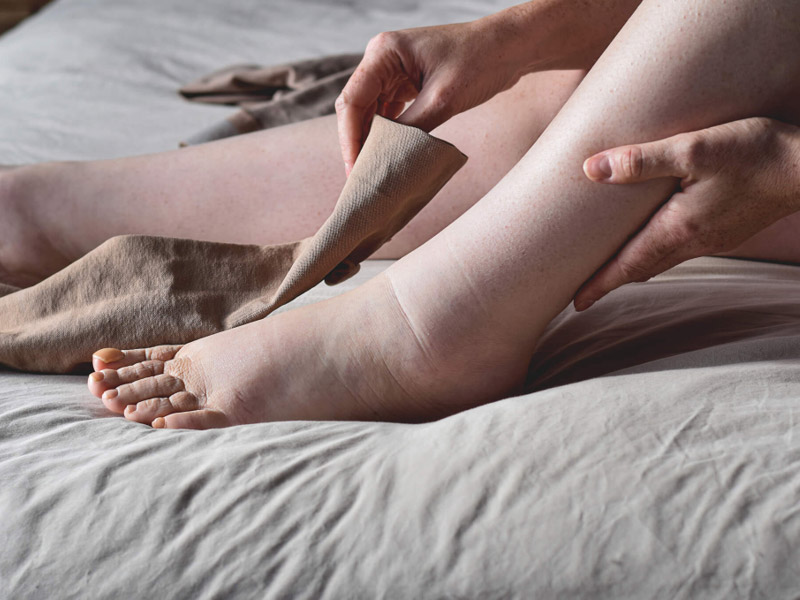
Why Do My Shoes Feel Tight at the End of the Day?
You might notice your shoes feel snugger at night or see deep sock marks when you take them off, even though they fit fine in the morning. This happens because gravity pulls fluid down into your lower legs and feet as you sit or stand throughout the day, especially if you’re in one position for hours.
For many people, this mild puffiness improves overnight as they lie flat and their bodies redistribute fluid more evenly. If the swelling is new, worsening, or accompanied by other symptoms such as shortness of breath or pain, it deserves closer attention.
What Is Swelling?
Swelling from fluid buildup is called edema, and when it affects the legs and feet, it’s often called peripheral edema. It happens when extra fluid leaks out of small blood vessels and collects in the soft tissues of your ankles, feet, or calves. The lower legs are a common place for edema because they’re farthest from the heart and most affected by gravity, so fluid naturally tends to pool there, especially later in the day. Conditions affecting your veins, heart, kidneys, liver, or lymphatic system can also change how your body handles fluid and lead to visible swelling.
Lifestyle Causes for Swollen Legs and Feet
Swollen legs and feet aren’t always a cause for concern. These are some of the most common, usually benign reasons for swollen legs and feet causes:
- Prolonged Standing or Sitting – Being on your feet all day, or sitting at a desk, in a car, or on a plane for hours, can cause blood and fluid to pool in the lower legs, leading to mild edema by evening. This type of swelling often improves after you elevate your legs or sleep overnight.
- Heat and Warm Weather – Hot temperatures cause blood vessels to dilate, which makes it easier for fluid to leak into surrounding tissues and can lead to puffy feet and ankles by day’s end.
- High Salt Intake and Weight Gain – Eating a lot of salty foods and being overweight both promote fluid retention and make gravity-related swelling in the legs more noticeable.
- Hormonal Changes and Pregnancy – Pregnancy, menstrual cycles, and certain hormones can increase fluid retention and pressure on leg veins, making swelling more common, especially late in the day.
Serious Causes of Swollen Legs and Feet
If you have consistent swelling in your legs and feet, we help test and diagnose the underlying cause. Some of the more serious causes of swollen legs and feet include:
- Vein and Circulation Problems – When swelling is frequent or chronic, vein problems are a very common culprit.
- Chronic Venous Insufficiency (CVI) – In CVI, the one-way valves inside your leg veins become weak or damaged, so blood doesn’t flow efficiently back toward the heart and instead pools in the legs.
- Varicose Veins – Enlarged, twisted veins reflect underlying valve problems and often go hand in hand with end-of-day leg swelling and a heavy, tired feeling in the legs.
- Deep Vein Thrombosis (DVT) – A blood clot in a deep leg vein can block blood flow and cause sudden swelling, usually in one leg, with warmth, redness, and pain. DVT is an emergency because a clot can break off and travel to the lungs, causing a pulmonary embolism.
How Heart and Kidney Problems Cause Swelling
Swelling can also be a sign of internal organ problems, especially involving the heart, kidneys, or liver.
In heart failure, the heart isn’t pumping blood as effectively as it should, so blood backs up in the veins and pressure inside them rises. That pressure pushes fluid into nearby tissues, leading to swelling in the legs, feet, and, sometimes, the abdomen.
Kidneys normally help your body balance salt and water. When they’re not working well, your body retains fluid that often shows up first in the feet and ankles. Liver disease can also affect how proteins and fluid are handled, leading to swelling in the legs and abdomen.
Medication Side Effects
Certain medications can cause or worsen leg swelling by retaining extra fluid or affecting blood vessels. Common culprits include:
- Some blood pressure medicines (like calcium channel blockers)
- Hormone therapies, including some birth control pills and hormone replacement therapy
- Steroids and some antidepressants
If your swelling started after a medication change, it’s important to tell your doctor rather than stopping the drug on your own.
When Leg Swelling Is an Emergency
Some symptoms can signal conditions that need immediate evaluation and treatment to prevent complications. You should contact a doctor promptly or seek urgent or emergency care if:
- Swelling appears suddenly, especially if it’s severe or you can’t explain it.
- Only one leg is swollen, particularly if that leg is painful, red, or warm (possible DVT).
- Swelling is accompanied by shortness of breath, chest pain, or a feeling of tightness in your chest (possible heart or lung problem).
- You notice rapid weight gain over a few days, increased swelling, or trouble lying flat without getting short of breath (possible heart failure flare).
- The skin over your swollen legs becomes very tight, shiny, blistered, or develops sores.
Practical Self-Care Tips You Can Try
Self-care does not replace medical evaluation, especially if symptoms are new or worsening. We recommend trying these steps to help reduce day‑to‑day swelling:
- Move Regularly – Try to stand up, walk, or flex your ankles and calves at least once an hour if you sit or stand a lot. Simple calf raises or ankle circles help your leg muscles pump blood back toward your heart.
- Elevate Your Legs – When you’re resting, prop your legs up so your feet are at or slightly above heart level to help fluid drain out of your lower legs.
- Wear Compression Stockings – Graduated compression socks or stockings can gently squeeze the legs to support vein function and reduce swelling, especially in venous insufficiency. Still, they should be sized and recommended by a clinician.
- Watch Salt and Fluid Intake – Reducing salty foods and following your doctor’s fluid recommendations can help limit fluid retention, particularly if you have high blood pressure, heart disease, or kidney issues.
- Maintain a Healthy Weight and Stay Active – Regular walking and a healthy weight reduce pressure on leg veins and improve circulation, which can lessen daily swelling.
Contact Cardiovascular Specialists of New England
Cardiovascular Specialists of New England provides general cardiology, interventional cardiology, and vein and vascular services to New Hampshire. If you’re experiencing ongoing swelling in your legs or feet, it’s essential to contact a vein and vascular specialist. Contact our office today to schedule a consultation.
Stay Tuned! More information coming soon!